
A collaborative research effort involving Hastings College students, faculty and a local medical professional has been published in the Undergraduate Research Journal for the Human Sciences (URJHS), a prestigious peer-reviewed publication.
The study, titled “Impact of the COVID-19 Pandemic on Parkinson’s Disease Patients,” investigates how the global pandemic affected the quality of life and functional abilities of individuals living with Parkinson’s disease (PD) in the rural Midwest.
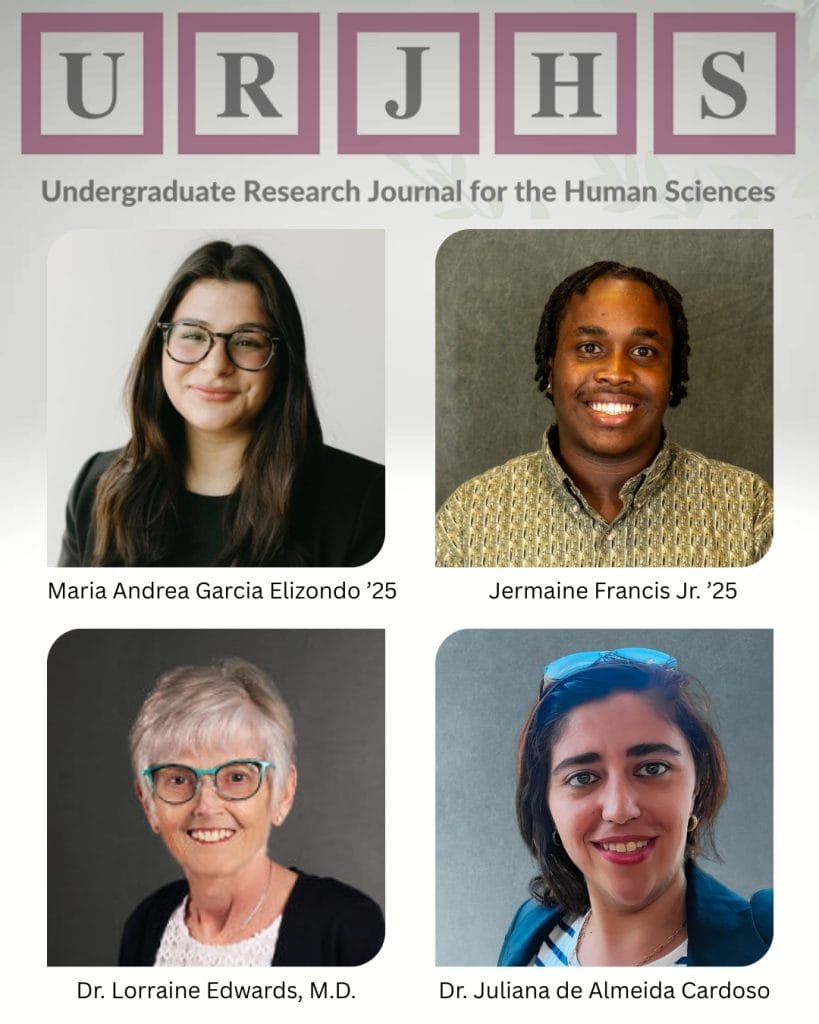
The research team was led by first author Maria Andrea Garcia Elizondo ’25 and included fellow graduate Jermaine Francis Jr. ’25, alongside faculty advisor Dr. Juliana de Almeida Cardoso, associate professor of psychology, and Dr. Lorraine Edwards, M.D., a neurologist with Central Nebraska Neurology.
“Leading this mixed-methods study allowed us to explore the complex intersection of neurodegenerative disorders and the psychosocial disruptions caused by a global health crisis,” said Garcia Elizondo. “It was a rewarding challenge to see the project through from the initial data collection to a peer-reviewed publication. I am incredibly proud that our findings contribute to a deeper understanding of the unique challenges faced by the Parkinson’s community in the rural Midwest, and I’m thankful for the mentorship that made this possible.”
The research project was made possible through the Hastings College Excelsior Scholars Program, which provides research grants to students. Garcia Elizondo received the grant in 2022 to complete the research while she and Francis Jr. were students. Garcia Elizondo majored in biochemistry, while Francis Jr. majored in health technology.
Using a mixed-methods approach, the team surveyed 31 participants and conducted 22 in-depth interviews. While the quantitative data showed no significant difference in daily functioning between those who had contracted COVID-19 and those who hadn’t, the qualitative interviews revealed a complex picture of the pandemic’s toll.
The researchers identified five key themes:
- Symptom overlap between COVID-19 and Parkinson’s.
- Health literacy challenges.
- The profound impact of social isolation.
- Varied reactions to the pandemic.
- Diverse perceptions of physical and emotional well-being.
The inclusion of Edwards provided a vital bridge between academic inquiry and clinical reality. Her expertise as a neurologist was instrumental in advising the students and framing the study’s impact on the local Parkinson’s community.
“This project highlights the multifaceted nature of quality of life for those with Parkinson’s,” Cardoso said. “The findings emphasize a critical need for interdisciplinary approaches, peer support and community-based programs. Seeing our students lead a project of this caliber that addresses such complex, real-world needs is a testament to the power of undergraduate research at Hastings College.”
The published study is now available through the Undergraduate Research Journal for the Human Sciences via New Prairie Press at newprairiepress.org/urjhs/vol18/iss2025/10.