
A lack of consistent regulation and data surrounding bat species may be complicating conservation efforts, according to research by Hastings College wildlife biology major Venn Wood presented during the poster session at the College’s annual Academic Showcase earlier this year.
Wood, who is from Lincoln, Nebraska, and graduated in May, began the project by examining Hastings College’s collection of bat specimens.
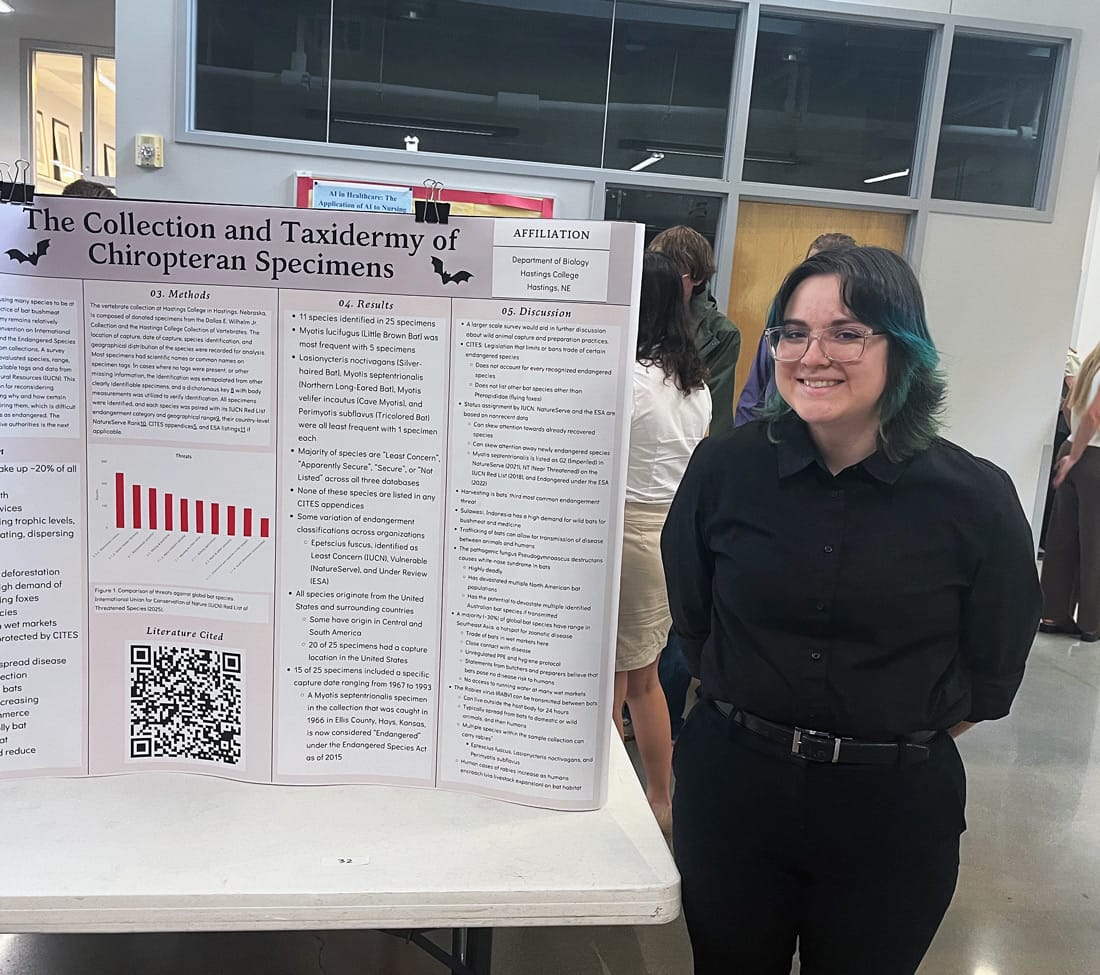
His survey, though limited to the specimens on hand, raised a broader question: How does the lack of regulation for bat species affect our understanding of which are endangered?
“It’s difficult to recognize endangerment across bat species when many authorities don’t recognize the same species as endangered,” Wood said, noting that state and federal agencies often use different endangered species lists.
Part of that challenge is there’s no central database. Wood said he had to use four different databases to put his survey together.
He emphasized the importance of shared sources and suggested a global database would fix a lot of the issues with endangerment labels. A more cohesive approach, he said, would help authorities more accurately establish which species are at risk.
Wood also spoke on the lack of procedure for vertebrate taxidermy, and particularly the sale of bats. He explained that the market has historically been saturated and loosely regulated, increasing pressure on vulnerable populations.
Online marketplaces such as eBay or Etsy have contributed to the problem, although both updated their policies in 2025 to ban bat products in an attempt to protect those in danger of extinction.
Without consistent oversight, Wood said, bats can be treated as commodities to be obtained rather than living, natural creatures, further threatening already at-risk species.
One example he focused on in his presentation was the Northern long-eared bat. This bat had been reclassified under the U.S. Endangered Species Act from “unlisted” to “endangered” in 2015, and it has not shown any signs of making it off the list. Though most of the population decline has been caused by a fungal disease, human infrastructure such as highways have led to rapid habitat loss for the species.
Wood said the threat against this and other bat species has consequences, as bats are important for the ecosystem, aiding with pest control, pollination and seed dispersal. Without them, many forest environments would suffer and many other creatures would face increased disease pressure from mosquitoes and other pests.
“There is one Earth and it should be protected,” Wood said.
Academic Showcase, held each spring at Hastings College, provides students the opportunity to share presentations and performances with the campus and broader community.